
Can Crocodile Oil Help With Acne, Eczema, and Skin Irritation?
Skin Conditions 21 January 2026
Many people exploring natural skincare oils wonder whether certain oils may help support skin conditions such as acne, eczema, or skin irritation. One oil that has gained attention in these discussions is crocodile oil.
Because crocodile oil contains a variety of naturally occurring fatty acids, researchers and skincare enthusiasts have begun exploring its benefits for skin, including hydration and barrier support.
In this article we look at how crocodile oil may relate to common skin concerns such as acne, eczema, and inflammation.
Crocodile Oil and Acne-Prone Skin
Acne often develops when pores become clogged with oil, dead skin cells, and bacteria. Because of this, many people are cautious about applying oils to their skin.
However, not all oils behave the same way.
Some natural oils contain fatty acids that may help support the skin’s natural balance. Oils rich in linoleic acid, for example, have been studied for their role in maintaining skin barrier function and overall skin health.
Because crocodile oil contains a mixture of fatty acids, some people explore it as part of their skincare routine for acne-prone skin.
As with any skincare product, results can vary depending on skin type.
Crocodile Oil and Eczema-Prone Skin
Eczema is often associated with dryness and a weakened skin barrier. When the skin barrier becomes compromised, moisture can escape more easily, leading to dryness and irritation.
Moisturizing oils are commonly used to help support the skin barrier and reduce dryness.
Because crocodile oil contains fatty acids that may help support the skin’s protective layer, it has attracted interest among those researching natural oils for eczema-prone skin.
Maintaining proper hydration is an important part of many skincare routines designed to support comfortable skin.
Crocodile Oil and Skin Inflammation
Inflammation can contribute to several skin concerns, including redness and irritation.
Some natural oils contain lipids that may help support skin comfort and hydration. Oils that help maintain the skin barrier may indirectly support overall skin appearance.
Because crocodile oil contains naturally occurring fatty acids, it has become an ingredient of interest among those researching natural skincare oils that support skin balance.
Traditional Uses for Skin Care
In traditional practices, crocodile oil has sometimes been applied to areas of dry or irritated skin.
These historical uses have inspired modern researchers to explore whether crocodile oil may have properties that support skin hydration and comfort.
While scientific research is still developing, traditional use remains an important reason for the growing interest in crocodile oil skincare.
Important Skincare Considerations
When exploring natural oils for skin concerns such as acne or eczema, it is important to remember that individual results can vary.
Factors such as skin type, product purity, and overall skincare routine all play important roles in skin health.
Performing a patch test before introducing any new skincare product is generally recommended.
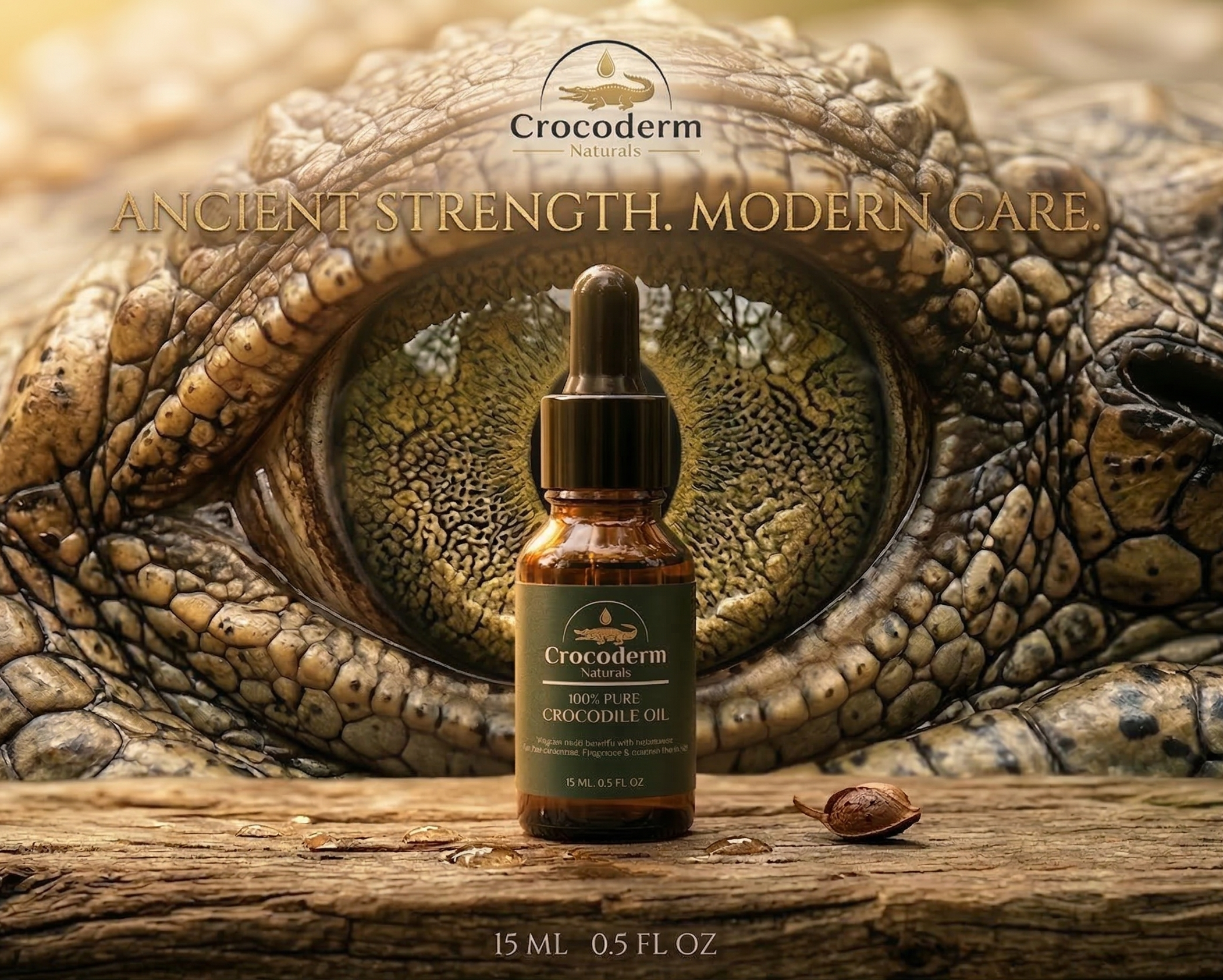
If you’re interested in trying crocodile oil as part of your skincare routine, explore 100% pure crocodile oil from Crocoderm Naturals.
Final Thoughts
Crocodile oil is an emerging natural skincare ingredient that has attracted interest due to its fatty acid composition and traditional uses.
While research continues to develop, the oil’s moisturizing properties and lipid profile have made it a topic of growing interest in discussions about natural skincare for acne, eczema, and skin irritation.
Crocodile Oil vs Emu Oil: Which Natural Oil Is Better for Skin?
22 January 2026

Can Crocodile Oil Help With Wrinkles and Fine Lines? What the Research Suggests
22 January 2026

7 Potential Benefits of Crocodile Oil for Skin: Hydration, Acne Support, and More
26 January 2026