
Why Crocodile Oil Is Becoming Popular for Tattoo Aftercare
crocodile oil benefits 06 May 2026
Why More People Are Using Crocodile Oil for Tattooed Skin
Tattoos are more than art — they’re an investment in your skin. Whether it’s a small fine-line piece or a full sleeve, proper aftercare plays a huge role in how your tattoo heals and how vibrant it looks over time.
As more people move toward natural skincare products, crocodile oil has started gaining attention among tattoo enthusiasts for its lightweight feel, deep moisturization, and skin-compatible fatty acid profile.
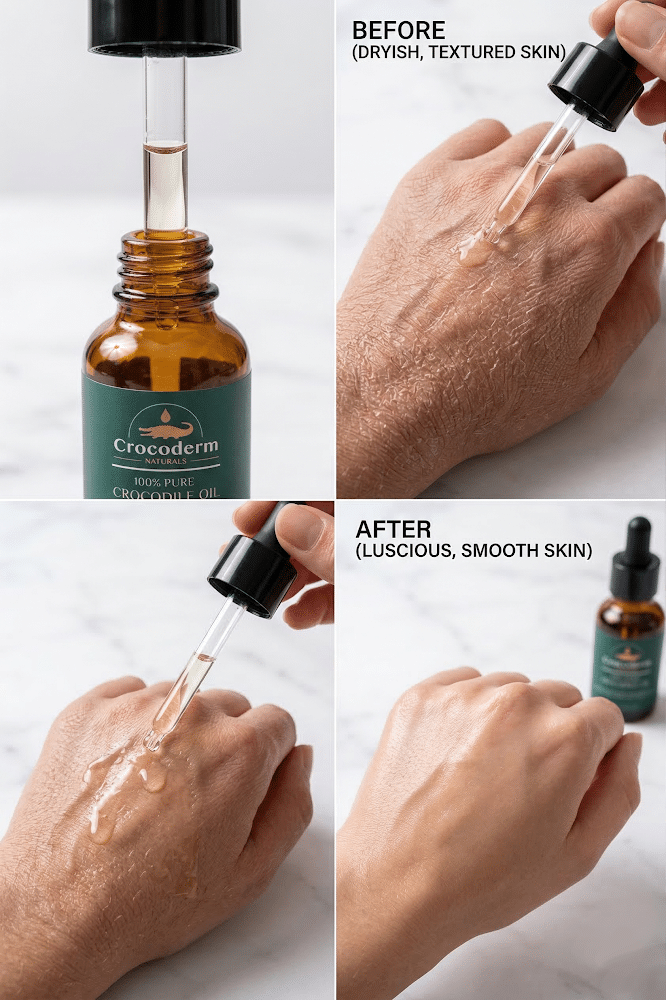
Unlike thick petroleum-based products that can feel heavy or greasy, pure crocodile oil absorbs quickly into the skin while helping maintain hydration and softness — something tattooed skin needs during both the healing process and long-term maintenance.
What Makes Crocodile Oil Different?
Crocodile oil has been traditionally used in various cultures for skin conditioning and moisturizing purposes for generations.
What makes it unique is its composition of naturally occurring fatty acids and lipids that are remarkably compatible with human skin.
Many users describe it as:
- Lightweight
- Fast-absorbing
- Non-greasy
- Softening
- Deeply moisturizing
This makes it especially appealing for tattooed skin, which often becomes dry, flaky, irritated, or tight after fresh ink.
Potential Benefits of Crocodile Oil for Tattoos
1. Helps Keep Tattooed Skin Moisturized
Fresh tattoos can lose moisture quickly, especially during the peeling and flaking stages.
Keeping the skin properly moisturized is important for comfort and maintaining the appearance of the tattoo.
Pure crocodile oil forms a lightweight moisturizing barrier without feeling overly heavy.
2. Lightweight Feel Without Thick Residue
Many tattoo aftercare products use petroleum or wax-heavy formulas that sit heavily on the skin.
Crocodile oil is valued for absorbing quickly while leaving behind a soft, conditioned feel instead of a greasy layer.
This can make daily application more comfortable — especially on larger tattoos.
3. Rich in Naturally Occurring Fatty Acids
Crocodile oil naturally contains beneficial fatty acids often associated with skin conditioning, including:
- Omega-3
- Omega-6
- Omega-9 fatty acids
These lipids help support the skin’s natural moisture barrier and maintain soft, healthy-looking skin.
4. Helps Maintain Soft, Smooth-Looking Skin
Tattooed skin can sometimes appear dry or rough over time if not properly cared for.
Consistent moisturizing may help maintain:
- Skin softness
- Smooth texture
- Healthy-looking appearance
- Vibrancy of tattooed areas
Many users prefer natural oils specifically for long-term tattoo maintenance after healing is complete.
5. Simple, Minimal Ingredient Skincare
One of the biggest reasons people are moving toward pure oils is ingredient simplicity.
Many commercial tattoo creams contain long ingredient lists filled with fragrances, dyes, alcohols, or synthetic additives.
Pure crocodile oil offers a minimalist alternative:
just one ingredient.
How to Use Crocodile Oil on Tattoos
For Fresh Tattoos
Always follow your tattoo artist’s aftercare instructions first.
Once approved for moisturizing:
- Wash tattoo gently
- Pat dry completely
- Apply a very small amount of crocodile oil
- Spread evenly in a thin layer
Avoid over-applying any product during healing.
For Healed Tattoos
Apply daily or as needed to help keep tattooed skin soft, moisturized, and healthy-looking.
Many people use it:
- After showering
- Before bed
- After sun exposure
- During dry weather
Why People Are Switching to Natural Tattoo Aftercare
Consumers are becoming more selective about what they put on their skin.
The growing popularity of:
- tallow
- emu oil
- lanolin
- botanical oils
- crocodile oil
reflects a larger movement toward traditional and naturally derived skincare products.
Tattoo enthusiasts especially tend to look for products that:
- feel natural on skin
- absorb well
- avoid heavy chemicals
- support long-term skin appearance
Important Note
Crocodile oil is not intended to diagnose, treat, cure, or prevent any disease or medical condition.
Results and experiences may vary from person to person.
If irritation occurs, discontinue use and consult a healthcare professional.
Can Crocodile Oil Help With Acne, Eczema, and Skin Irritation?
21 January 2026
Crocodile Oil vs Emu Oil: Which Natural Oil Is Better for Skin?
22 January 2026

Can Crocodile Oil Help With Wrinkles and Fine Lines? What the Research Suggests
22 January 2026